
A Komuso practice · under a minute
Double Breathing.For the moments that arrive hard.
In for four. Pause for one. Out through the Shift for eight. Three rounds, under a minute, and the moment is still there, but you are back in it on your own terms.
When to use it
The sharper moments
Most moments only need the long exhale. Some arrive harder. This is for those.
It is already tight before you have decided anything.
You are composing the reply before you have finished reading.
The minute before it wins or doesn't.
The conversation turns, and so does your breathing.
Guided
Follow the bar
It fills while you breathe in, holds for the pause, and drains while you breathe out. Three rounds, then a beat.
Before you go back into the moment. Then respond the way you choose to.
Deep, through the nose. Four seconds.
Just for one.
Eight seconds. All the way out.
Under a minute, start to finish.

Why the exhale is doubled
The long way out does the work
This is the same breath you already know, with more weight behind it. The exhale is twice the inhale on purpose: eight seconds out against four in.
Don't fight the feeling while you do it. You are not trying to delete it; you are giving yourself room next to it.
The pause in the middle is short on purpose. One second is enough to mark the turn from in to out; long holds are a different practice, and not this one.
Side by side
Which breath, when
| Double Breathing | Equal Breathing | The Long Exhale | |
|---|---|---|---|
| When | Something loud right now | Nothing wrong right now | Any time |
| Counts | 4 in, pause 1, 8 out | 5 in, 5 out | None |
| Rounds | Three | Six | Three or four |
| Time | Under a minute | About a minute | About a minute |
| Feels like | Relief | Rhythm | Settling |
Swipe for the other two →
Can't remember which? Just the long exhale. That one always works.
After the rounds
Respond, don't react
Komuso's method in four words. Double Breathing is the middle two; the last one is yours.
The chest, the jaw, the breath that just stopped. You caught it; that is most of the work.
One beat. No reply yet, no decision yet.
In for four, pause for one, the long way out for eight. Three times.
Now, from a slightly different place than the one you were about to answer from.
Three ways people get it wrong
And the fix for each
Let it be there. You are breathing next to it, not against it.
If eight is too much, make it six. Keep the exhale longer than the inhale and it is doing its job.
It lands faster in a body that already knows the long exhale. A minute of Equal Breathing on the calm days is what makes this one work.
From a customer
Quick enough to be noticed
“It calms me down so quickly that my boss asked what was in it. :)”
Alexandra G. · Verified buyer, Classic Shift
Good to know
The small details
Which one, this or Equal Breathing?+
Nothing wrong right now: Equal. Something loud right now: this. Can't remember either: just the long exhale. That one always works.
Eight seconds is hard.+
Then six. Keep the exhale longer than the inhale and it's doing its job. This should feel like relief, not effort. If you feel lightheaded, breathe normally and make the counts smaller next time.
Will anyone notice?+
The Shift is whisper quiet and reads as a necklace. Three rounds in a meeting, in traffic, at the table: nobody asks.
How often can I do it?+
As often as the moment asks. There is no limit. If the counts start to feel heavy, make them smaller rather than skipping it.
Can I do it without the Shift?+
Yes, with pursed-lip breathing. The Shift sets that long exhale pace for you and is on your chest when the moment is loud.
Keep going
Before and after the hard moments


More practices: The Long Exhale · Find Your Moment · Check Your Wearable
Reading this without a Shift?
Relief you can reach for.
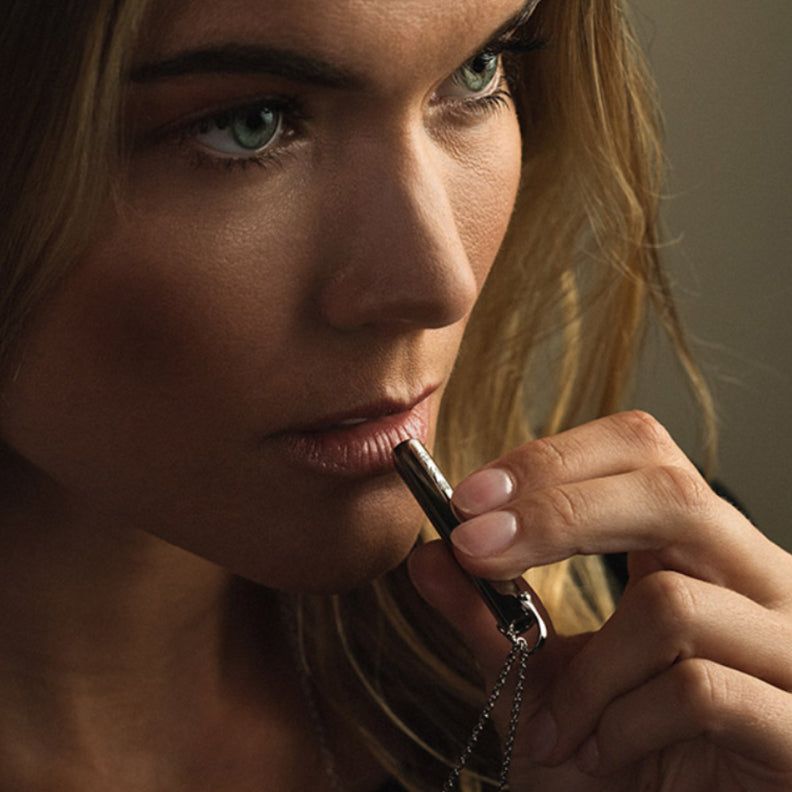
The pattern works with pursed-lip breathing. The Shift is the necklace you breathe out through: it slows your exhale, a simple way to pause when the day gets hectic, and it is on your chest when the moment is loud.
Breathe with us.Komuso
